
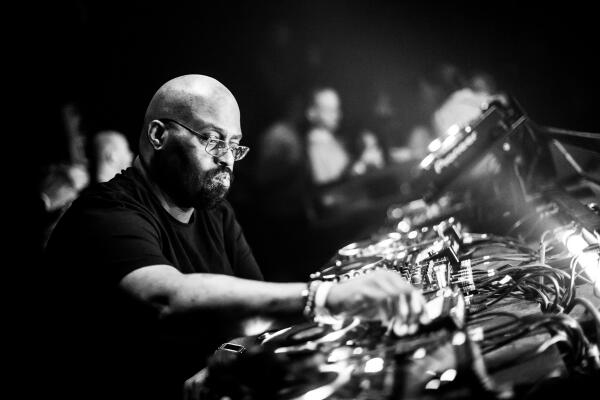
In the late 1970s, during a time of great financial turmoil and social turbulence in America, the culture was desperately in need of a savior, or as some would say a revival. As the anti-disco movement progressed, which was also heavily centered upon being anti-Black, a new genre began to emerge from the underground world. Black, Latino and gay communities were forced to musically escape below the surface of two of the most prominent cities in America, Chicago and New York. When nothing else seemed to be the same and unforgettable shifts took place across the country, minorities found refuge on the dance floor. From the epicenter of DJs, producers and remixes, came the ever-evolving genre of house music.
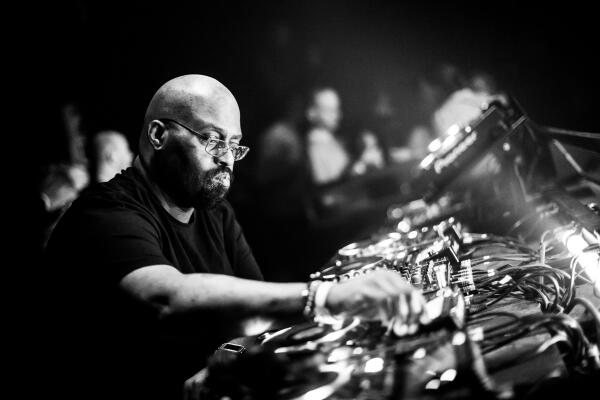
The End of an Era: Disco Demolition Night
In the ’70s, disco was the talk of the century with its revitalizing tempos and energetic rhythm, which made the dance floor irresistible. Not only did disco take over the clubs, but the entire American culture, from Hollywood movies like Saturday Night Fever, to reaching the top 40 hits on the radio, to even Soul Train, one of the most culturally influential Black shows to date. Songs like “Freak Out” by Chic, “I Will Survive” by Gloria Gaynor, and “Hot Stuff” by Donna Summer were played everywhere. Although disco paved the way for music to be as riveting and euphoric as ever, those opposed to this genre were lurking behind the shadows, planning its downfall.
With the backlash came anti-disco rallies, the most memorable and successful being Disco Demolition Night at Comiskey Park, July 12, 1979. Radio personality Steve Dahl was one of the many who despised disco and was even fired from Chicago’s WDAI, after its transition from a rock to a disco format. Dahl undoubtedly had the voice, but still needed the perfect platform to ensure disco would die by any means necessary. With the support of his new job at Chicago’s radio station WLUP, Dahl’s campaign, “Disco Sucks”, was finally launched. His mission would eventually stir up emotions across the city to not only destroy the legacy of disco, but Black music.
That night in Comiskey Park, forever challenged the flourishing era of disco. Dahl led a crowd of around 60,000 people, including heavily drugged and alcohol influenced Rock fans of his, who brought disco records that would be the key to their successful riot. In between the doubleheader, Dahl drove out onto the field leading the chant, “Disco Sucks”, followed by him detonating a pile of records for all to see. This was the cue for an estimated 7,000 people who then ran onto the field, vandalizing it and burning their records where they saw fit.
Prior to the game, the White Sox team owner, Bill Veeck, agreed with this intricate plan. Consequently, he catered to an audience outside of baseball with a destructive goal of their own. Those who brought a record were permitted to watch the game for only 98 cents. Unfortunately, due to Veeck’s lack of discernment, the team forfeited their second game, attributable to the striking crate in the middle of field.
You don’t know how it’s going to end up necessarily. You think it’s a good idea, and it just got out of hand. He was more popular, had more pulling power, than we felt was possible.
Bill Veeck
Disco Demolition Night influenced the music industry nationwide. As hatred grew for disco, a decline in sales, charting, as well as radio playtime followed shortly behind. According to producer Vince Lawrence, who at the time of the game was an usher, most of the records piling up at the gate were not merely disco records but were those established by Black artists. Therefore, it was clear this night was not just an anti-disco movement, but evidently an anti-Black one. However, little did Dahl and his followers know, the era of DJs in the Black community would soon revive the culture. Thus, from the ashes of one genre came another, and house music was born.
The Foundation of a New House
The disco era transpired during one of the worst financial times in America since the Great Depression. There was a tremendous amount of social unrest, and culturally the U.S. was dwindling. Simultaneously, the oppressed were committed to ensuring their voices were heard amongst the masses. Accordingly, came the rise of three of the most impactful movements ever: Women’s Rights, Gay Liberation and Black Power. In the ’70s, New York clubs like The Loft and The Gallery, were safe havens for these marginalized groups. While women, Black and gay people supported one another during the day at protests, within the night, they reunited laying it all out on the dance floor. These underground clubs became the microcosm of what was occurring daily.
As The Gallery attracted more customers each night, management was desperately in need of extra workers. Therefore, Nicky Siano, DJ, and owner of The Gallery, hired Frankie Knuckles, who would later become the Godfather of House. Alongside Knuckles was his childhood friend and future DJ pioneer, Larry Levan. At the time, their job was to help with the setup of The Gallery, but there was no limit to how influential they would become, even 50 years later.
Eventually in 1973, they both moved onto The Continental Baths, one of the most iconic gay bathhouses, with Levan as the DJ and Knuckles working the lights. Here, Levan was well known for his iconic mixes of disco, progressive rock, soul, and rhythm & blues. In 1977, he would outgrow this club and move onto the next chapter in his career, as a DJ at Paradise Garage. There he finally proved himself to be one of the greatest DJs of his time.
Moving forward, after studying his peer, Knuckles took over as the head DJ at The Continental Baths. Although his name was the talk of the town, he had yet to solidify his own sound apart from Levan’s. Therefore, when Robert Williams, The Warehouse club owner from Chicago, visited New York seeking a DJ, Knuckles knew it was time to stamp himself in the world of music forever.
According to Williams, The Warehouse was a private gay club three stories high, that was open from midnight until about 8 a.m. With the help of the renowned sound designer Richard Long, Knuckles brought an entirely new sound to Chicago. The vibes at The Warehouse were known to be so extraordinary and filled people with such a sense of euphoria, they felt high off the music alone. As word spread, people outside of the gay, Black and Latino communities took great interest in knowing what this blissful experience was all about.
Record producer, artist and DJ, Jessie Saunders, was only 16 years old during his first time at The Warehouse. He claimed to have heard rumors about it being a gay specific club, but nonetheless he still chose to witness something that forever filled his heart with nostalgia. Once you felt the music vibrate throughout your body, from the bottom of your feet to the top of your head, you were stuck in a trance where nothing else mattered. Regardless of the baggage partygoers carried within them during the day, at night, nothing but spectacular vibes ever stepped foot in The Warehouse.
The Godfather of House Music
“What is this?” This was the number one question on everyone’s mind, the second they entered the safe haven that was The Warehouse. Knuckles so effortlessly cultivated a style of music that was unheard of, mixing genres of disco, soul, funk and more. Although his unique taste in music was so distinct from other DJs, Knuckles invariably played what his audience desperately craved.
The Godfather of House would select the greatest parts of a classic like Michael Jackson’s “Rock With You” and slice them together, creating a dynamic sound people could not resist dancing to. With his deejaying skills of steady four-on-the-floor pulses and electric tempos ranging from 120 to 130 beats per minute, Knuckles would fill the room with musical tension. Also, his breathtaking style progressed with drum machines, sound effects, layering techniques and drawing out melodies. He was the legend people would travel all over for, to hear musical influences from cities, such as Philadelphia to New York and more, all in a singular set.
Knuckles was not only a DJ, but a music artist who produced some of the greatest tracks that sparked a light worldwide and introduced listeners to the grooviest tunes they ever heard. One of his best hits that catapulted house in the ’80s, was his version of Jamie Principle’s “Your Love”.
As the audience chanted his name throughout the night, Knuckles would return the favor with a remix even better than the last. There was no limit to his groundbreaking innovative skill set, which is why he will always be known as the blueprint.
The Era of DJS & Record Labels
Not only did Knuckles single-handedly influence a new genre of music, which is still popular today, but he paved a way for it to spread across Chicago without his appearance being needed. More specifically, he handed out cassette tapes of his music, and within days, thousands of copies spread around the city. Considering how much gang violence there was, partygoers were sometimes forced to stay at home to secure their safety. However, with the help of their cassette tapes, the party never ended. This process unknowingly started the era of deejaying.
DJs began to buy two copies of every record in order to play mixes and sample music, utilizing 1980s synthesizers, such as the Roland TR-808, the Roland TR-909, the Korg Poly-61 and the Roland TB-303 Bass Line. As the emergence of DJs grew significantly, everyone wanted to shine, even if they had to steal records from others. Therefore, regardless of this being the perfect time for anyone to learn the art of deejaying, there was also a wandering lack of trust from outsiders.
In the late ’70s and early ’80s, schools would throw dances to raise money. Specifically, Mendel Catholic High School, made a well running business out of these parties, where teens all over Chicago would attend. From those exhilarating youthful nights in gymnasiums to the underground party scene, came the connection of house music across the city.
Critically acclaimed, Steve “Silk” Hurley, would travel from house to house, eager to learn how to DJ. Once he acquired his own equipment, he consistently practiced remixing in his basement for eight hours a day. His efforts soon paid off as he created his first hit record in 1986 “Jack Your Body”, which was heavily influenced by house music’s popular dance style “the jack”.
As the culture of DJs spread throughout Chicago, many would come together in school gyms to host sound clashes. One of the most notable at these events was DJ Pierre, who would later join the music group Phuture, in 1987. With the release of their classic song “Acid Tracks”, they pioneered and defined the sub-genre, acid house.
Jessie Saunders, at an early age hopped on the DJ train. He taught himself how to scratch, reverse and phase records together, while maintaining a steady beat. After experiencing Knuckles’s sets, his love of house music and his dedication to his artistry grew tremendously, and he too became a pioneer of his time.
With a 4-track recorder, Poly-61 and Roland TR-808, Saunders collaborated with producer Vince Lawrence to release their hit single “On and On” in 1984, a song many believe to be the catalyst of house. To make a substantial profit, they learned the pressing process of records and immediately hit the town selling 12″ copies of their song wherever they could. Business was booming so quickly that within the first week about 10,000 to 12,000 copies were sold. The next step was to formulate, Jes’ Say Records, which led to an awakening in Chicago. People saw this as a new way to make a name for themselves. Thus came the dawn of record labels.
DJ Ron Hardy: The Music Box
In the early 1980s, Chicago officially ruled the Warehouse to be unsafe for parties. Thereupon, Knuckles took this opportunity to own the club, the Power Plant. Meanwhile, DJ Ron Hardy took over the Warehouse after its rebranding into The Music Box, where the music was so loud you were forced to dance to it.
Hardy’s radical style differed from Knuckles, while he heavily focused on the bass and pitch of the music. His beats were known to be faster, louder and harder than most. It was as if the crowd were one with the sound system. People described him as a DJ who would surprise his audience by constantly pitching up the music, cranking up the reverb and playing records in reverse. Hardy centered his attention on looping the instrumental breaks of his songs constantly, which would bring about hallucinatory effects. Although, he and Knuckles had their differences, like the Godfather, Hardy relied on the use of sound effects to spice up a song right at the perfect moment.
Many believe Hardy is the only person who could compete with Knuckles for the title of the Godfather of House, and his profound style was a true testament to this belief. Like Knuckles, Hardy’s sets would liberate anyone whose ears had the honor of listening.
House Music’s Everlasting Effect
House will forever be a genre that connects people of varying races, religions and even sexualities. It was and still is today, a style of music that encapsulates dance. Considering house consists of cross-genre influences, there is a great song for everyone, regardless of their musical preference. Within the ’80s and ’90s, house music’s influence spanned from Chicago to New York and Detroit. More specifically, the sub-genre Detroit techno was conceived, and out of its womb would later come EDM, electronic dance music. Record labels and radio stations shifted their focus to house formats, with the goal of dance music reaching new heights, but little did they know house would soon have an international rise.
This electrifying dance genre traveled across the seas and was even one of the most in demand styles of music in Europe. In fact, in the United Kingdom, “Love Can’t Turn Around” by Farley “Jackmaster” Funk and Jesse Saunders peaked at #10 on the singles chart in ’86, while “Jack Your Body” by Steve “Silk” Hurley reached #1 in ’87.
Latin House music originated as DJs began to incorporate Spanish vocals and Latin tempos alongside house mixes, while its influences derived from Puerto Rican, Cuban, Dominican and African music. DJs like Jesse Velez ensured its popularity, with hit singles like “Girls Out On The Floor”.
Over the years, house split into numerous sub-genres, some of the most popular being acid house, Chicago house, Latin house, deep house, funky house, electro house, UK hard house, tropical house, Detroit techno, progressive house and tech house. However, its development does not end there. Today house music is known to be the home of raves, and its hypnotic beats are played in clubs across the globe.
Although this global phenomenon has such a stronghold in the music industry, house has been immensely commercialized and whitewashed since the ’90s. Most partygoers of today’s generation are clueless to the history, as well as the strong sentimental value this music has within the Black, gay and Latino communities. Nonetheless, house will always derive from an era that unified people across cultures and ethnicities. Thanks to the blood, sweat and tears of the greatest musical minds in the ’70s and ’80s, house music’s everlasting effect on society will never cease.
 The C.M.G. Exclusive