
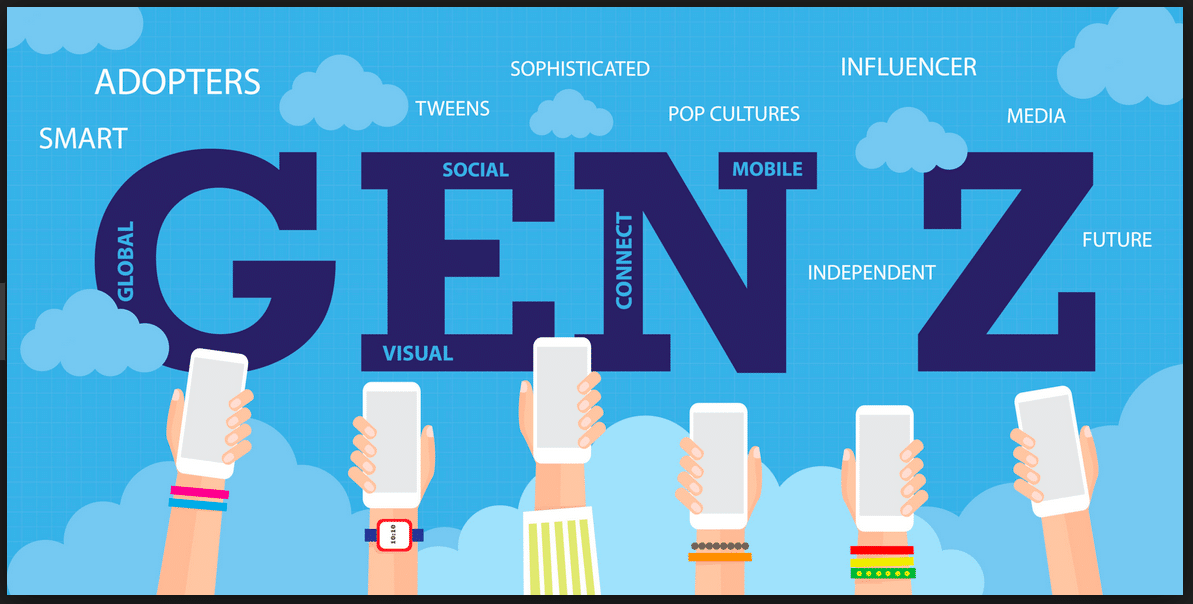
While a great portion of Gen Z within the United States has finally reached their young adult years, an innumerable amount of responsibilities have fallen into their lap. However, specifically those who have at least received their bachelor’s degree, have a common integral concern. As a result of the unfortunate and tragic pandemic that began in 2020, COVID-19, the economic state of America has since endured a rise in inflation, especially considering the ever-growing rates of, but not limited to: rent, loans, gas, insurance, groceries and interest. Recently this past November, Reuters reported, Deutsche Bank economists projected 175 basis points in rate cuts in 2024. Correspondingly, there will be approximately two quarters of negative economic growth within the first six months of next year and a 0.7% increase in the unemployment rate in the near future. Which begs the question, is Gen Z prepared for adulthood for the remainder of their life?
Synopsis of Study
The purpose of this article is based on a study conducted by myself, in which 22 Gen Z individuals, ranging from 22 to 25 years of age with at least a bachelor’s degree, anonymously answered 19 questions regarding how accustomed to and well prepared they are, as well as how they have navigated adulthood thus far. While a few questions were formed utilizing a linear scale with one being the lowest or “not at all” and five being the highest or “very”, most were short answer questions to ensure the gathering of precise information. Below are the results, including statistics and quotes from responses, as well as research from outside sources.
The Findings
Coming To Terms with Five Day Work Weeks
When asked, “How well have you come to terms with accepting five-day work weeks without summer, Christmas/winter and spring breaks to look forward to?”, some participants made it very clear they try not to overthink these realities and have accepted as well as adapted “to a routine that seems endless.” However, most subjects strongly expressed their disdain for it. Despite this, those who work in education have the luxury of receiving a more generous schedule.
Traditionally, from the time Americans enter preschool, to the time they complete high school, there has been a set order to things. More specifically, students are granted Thanksgiving, Christmas/winter, spring and summer breaks every year, with additional days off on select holidays. This invariable academic calendar allows children as well as teens to enjoy time with family and friends, travel, and recharge before returning to school. Likewise, during undergraduate programs, there are set breaks as well. Therefore, to jump from experiencing this fixed lifestyle for about 22 years of age, to now being withheld from having breaks outside of paid time off, has been arduous and demanding for young adults.
It’s a harsh reality to accept. I’m starting to come to terms with it, but it just feels dehumanizing to have people working like they’re just another brick in the wall.
Anonymous
I have not. It hurts to think about, I’m already trying to figure out how I’ll give myself sabbaticals every few years or between job transitions. I just know that this won’t be sustainable for very long stretches for me. Luckily, I’m in an industry with a lot of flexibility in vacation hours and hybrid/remote work schedules, but even then, I’m afraid.
Anonymous
However, the minority of the group prefers this lifestyle, believing it challenges their capabilities of working diligently, and thus increasing their work ethic. Furthermore, they enjoy the freedom to create their own breaks, rather than it being predetermined for them.
I have come to terms with this schedule and actually prefer to stay busy throughout the week so it’s more rewarding once the weekend and breaks come.
Anonymous
I honestly make my own breaks during holidays and all year round. I like this lifestyle better than someone telling me when I can take a break versus me taking one when I want to.
Anonymous
Student Loans
Moreover, 65% of the 14 subjects who have student loans, claim they are not even remotely close to being prepared for or are financially stable enough to pay them off. Earlier this year on June 30, the Supreme Court voted against the authorization of President Joe Biden’s student loan forgiveness program, which would have erased $430 billion of debt within the U.S.

Nationwide, Gen Z and millennials expressed their frustrations with the government’s decision, especially considering a multitude of people within this specific demographic voted for Biden, because of how adamant he was to set this loan forgiveness plan into motion.
The Intensity of College & Entry Level Positions
When asked, “How do you feel about the majority of entry level positions having the requirements of at least 3 years of work experience? Do you think that’s fair and attainable for recent graduates?”, the majority expressed how limiting and unreasonable this is. 19 participants believe entry level jobs with these requirements should be forbidden. In fact, they affirmed this amount of experience should only be warranted for intermediate level positions, whereas entry level jobs should be attainable with a college degree.
As a rule of thumb, it is encouraged to have completed an internship before graduation, in order to increase the likelihood of being qualifiable and thus landing a career. Nonetheless, there are a plethora of industries that provide an extensive amount of unpaid or minimum wage full time internships. Unfortunately, students from impoverished or less wealthy backgrounds who have to provide for themselves and cannot survive off of an internship alone, must find work alongside it, while maintaining a certain grade point average. This can ultimately leave them at a disadvantage and increase their chances of a burnout. Additionally, American colleges are known to be rigorous and time consuming, which may leave students who must juggle all three: work, internships and school, with a crucial decision of being forced to focus on one more than the others.
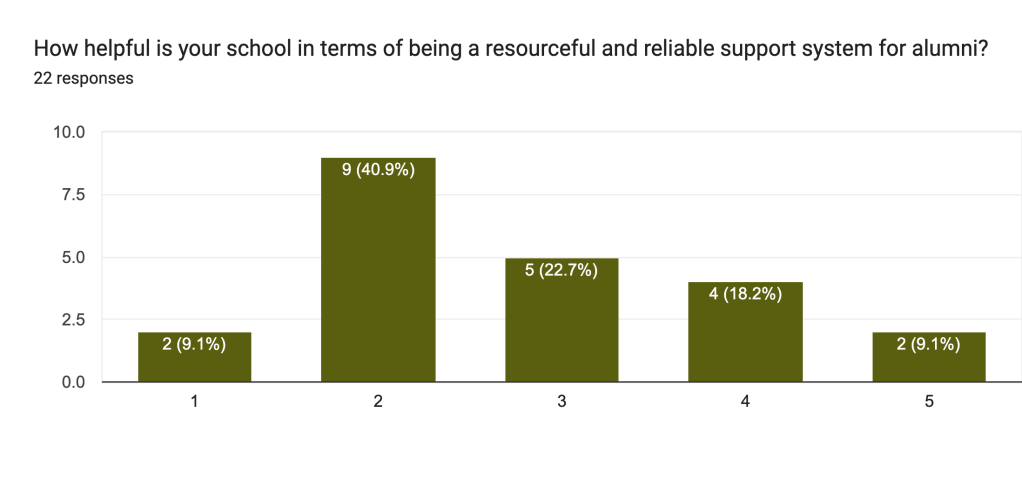
Not to mention, a portion of American colleges have poor reliability and resourcefulness, further deterring their students’ chances of excelling post-graduation. The graph below reveals, 50% of the 22 candidates of this study believe their school is unsupportive. While 22.7% are indifferent, 27.3% graduated feeling their alma mater is dependable whenever needed. Ultimately in this case, gaining the necessary experience for a career prior to graduation, varies per person.
Work Life Balance
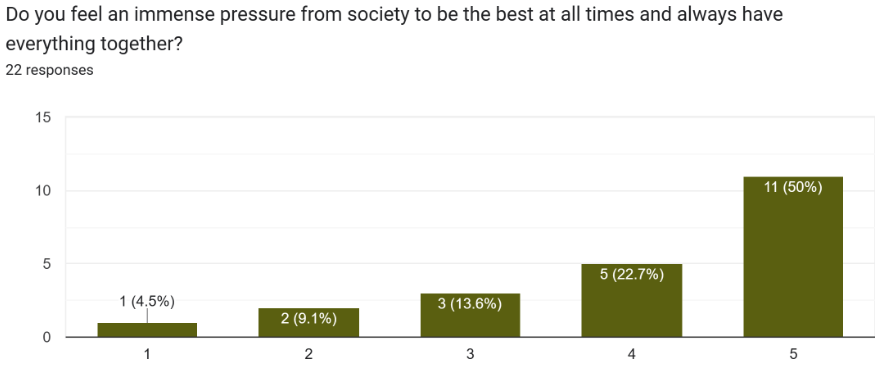
In American society, work is at the forefront of everything. Whenever a friend or family member greets their loved one, one of the first questions asked is, “How is work?” Furthermore, the general public of adults base a majority of their happiness on their career and spend most of their time working, which leaves less of it for other obligations and leisure activities. As a result of this issue, a great portion of Gen Z struggle with depression and anxiety. 72.7% of the subjects in this study feel an immense pressure from society to be the best at all times and have everything together in their life. Meanwhile, more than half of them emphasized the daily struggle to make enough time for themselves in their personal life, whether just relaxing, going out with friends, or working on hobbies and other goals. Hence why many resort to taking a Friday off whenever necessary to rejuvenate themselves.
My biggest struggle is balancing my social and work life. Although I prefer to be busy, it becomes a challenge spending so much time away from friends and family, and this puts a strain on my relationships personally.
Anonymous
I don’t have time to do the things I used to look forward to doing. Working 40 hours and attending classes definitely take a toll on an individual.
Anonymous
However, those who are navigating their work life balance exceedingly well are able to do so, because their jobs are hybrid, have four-day work weeks, are part-time workers, mastered time management, or solely thrive off of intensity.
I am definitely always on the go and bombarded with tasks. I feel like I make time to do everything I want to do. It can be exhausting but the time is there. This is definitely because I wake up at around 6am almost every day to get the most out of my days.
Anonymous
I work many jobs to accumulate a high salary. I rarely see my friends and work all week. I love what I do and still play basketball, my passion every weekend. But I definitely feel locked in. I am not against it though.
Anonymous
Coping Mechanisms & Self Care
I definitely feel depressed about the fact American adults have not been prioritizing their mental health and well-being for so long. Becoming an adult has shown me the struggle that our parents have faced, and I think there is a better way.
Anonymous
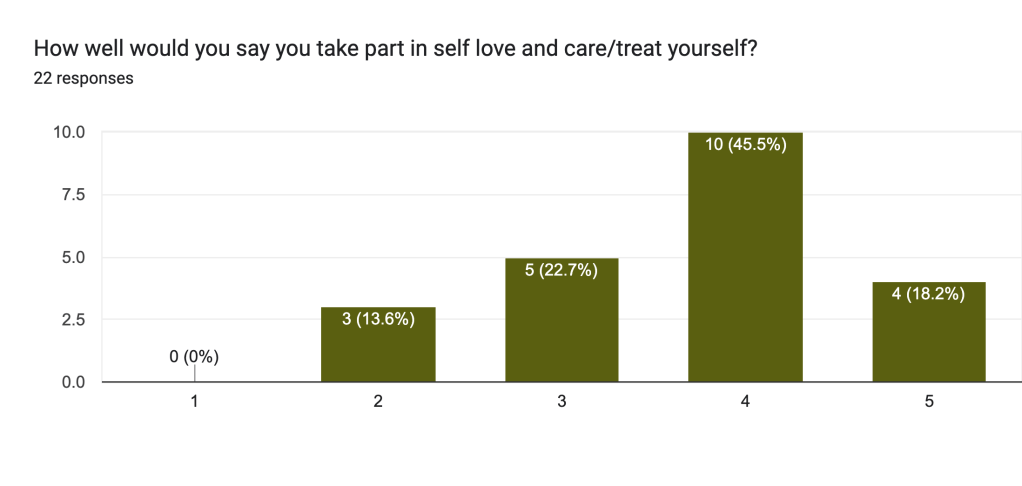
When the pressures dawn on them too heavily, Gen Z, will do whatever possible to maintain their sanity by cultivating their best version of self-care for themselves, in which 63.7% of them in this study claim to do so very well. Some of these coping mechanisms consist of, but are not limited to: listening to music, exercising, surrounding themselves with loved ones who understand their struggles, lean on parents and partners for support, tap into self-care daily, read, meditate, journal and pray. The majority of participants highlighted the vital key to how well they can handle the stressors life throws at them, is ultimately having a great support system. Sadly, a few stated they can only rely on themselves, which in return takes a great toll on their mental health.
Affordable Housing
100% of the six Gen Z participants who currently live on their own, expressed their resentment for rent rates, especially those who reside in New York City.
I don’t think that rent is reasonable these days, but I live in a major city with ridiculous inflation prices. I have family in places where things are a bit more reasonable who have been able to, with or without degrees, set up lives for themselves. The major cities are becoming increasingly unrealistic for people though, and even smaller cities are rising in price very quickly.
Anonymous
I have my own apartment. Rent rates are unreasonable for the large majority of our generation. This is extremely problematic, given that this encourages young adults to live at home. This puts them in situations where they are not truly experiencing adulthood and independence.
Anonymous
The increase in rent rates will never make sense to me. In New York, a $2000 per month apartment will only get you such a small size apartment compared to upstate pricing.
Anonymous
Unfortunately, the lack of affordable housing forces many to remain residing in their childhood home, take on more than one job at a time, or live with random roommates. Therefore, the idea of the “American Dream” of someone achieving a career, getting married and buying a home while young, is gradually becoming less than a common reality and instead merely just a dream. According to a survey by Freddie Mac, a corporation chartered by Congress in 1970 to support the U.S. housing finance system and ensure affordable housing, one in three Gen Z adults are convinced homeownership is inaccessible. As stated by The New York Times, 33.33% of Gen Z plan to continue living in their childhood home for the foreseeable future. Meanwhile, throughout their research, the NYT discovered a 23-year-old from the Bronx and a 25-year-old from Mamaroneck, contribute 85% and 70% of their income to their rent in New York, respectively.
The participants of this study who still live with their parents, also do not plan on moving out anytime soon. In fact, they believe although entry level positions generally require three plus years of experience, salaries are not nearly enough to financially support them. 59% of them feel trapped and pressured, 54.5% feel depressed, and 63.6% feel hopeless. However, on a lighter note, 59% feel well supported, 50% feel encouraged and happy, and 54.5% feel unconditionally loved.
In my field, I don’t think an entry level salary would be enough if I wanted to live alone. Most apartments and houses for rent in my area start at $2,000. This could maybe be possible if I moved somewhere with my partner, but even then, it would be tight and most likely unattainable. Wages do not reflect the drowning costs of inflation.
Anonymous
I plan on moving out in the winter of 2025 and have been saving for over two years to make it happen. Entry level positions aren’t feasible to financially support someone unless they consider getting roommates. Plus, the rising rents have been so worrisome that I had to delay my original Summer 2023 move out date. Still, I’m holding out hope for the NYC Housing Lottery to get an affordable option without roommates.
Anonymous
I currently work an entry-level position, and I am not where I want to be financially in order to move out. I am grateful for the experience that entry level positions offer, but, unfortunately, experience does not pay bills.
Anonymous
The current wages are not able to support much since the cost of living continues to rise and wages stay the same. I think there’s a lot I’d have to sacrifice in order to pay for rent, such as the quality of my groceries, my social life and needed health products.
Anonymous
Coinbase, a corporation whose mission is to build the crypto-economy and ensure anyone can easily benefit from their “trusted and easy-to-use platform”, recently published a new ad campaign regarding the obstacles Gen Z face with homeownership. Throughout the video, Coinbase focuses on the grand distinction of young Americans stepping into adulthood and gaining their independence when buying a home, within the 20th century compared to now. In accordance with their commercial, the only decade whose youth are enduring one trial and tribulation after the next is the 2020s.
The Future of Gen Z’s Living Situation
The last question within this survey focused on whether Gen Z ever plans to move out of the state they currently inhabit or move abroad. Eight participants who stated they live in New York would remain, because of the opportunities provided and their love for the way of life there. However, two of them plan to move out of the five boroughs and into the suburbs of Long Island or upstate for a more feasible lifestyle. Whereas the remaining 14 individuals plan to either move out of the U.S. or to another state for the chance of a fresh start, new opportunities, less expenses and to experience distinct cultures worldwide.
I don’t want to move outside of the U.S, due to the fact, I think it is the best country in the world. However, staying in NY is not in my future plans. I want to be able to settle down and have a family in another state possibly, where taxes and prices aren’t so high.
Anonymous
I live in New York. I most definitely consider moving out of state. I don’t think I’d want to move out of the country because being near my friends, family, and community is very important to me, and I do like where I live. But the cost of living here is absolutely disgusting. I want a slow life, to be surrounded by nature, somewhere quaint and small. If I were to move elsewhere, I love the town of Salem, Massachusetts. It’s a beautiful place but equally as expensive. It’s a big thing to think about, but that’s where I would choose if I had to go.
Anonymous
I have thought about leaving the country in its entirety due to the lack of care for citizens. I live in New York which is a very fast paced state and a competition in itself. Then I see other countries like Finland with 4-day work weeks, reasonable lunch times and longer maternity leave, that makes me question why I would stay here?
Anonymous
I don’t think that I am considering leaving the country or state at this given moment. I don’t believe a new location would be the solution to universal stressors.
Anonymous
Currently in Queens, I feel like living in NYC is definitely stressful, and I see myself moving out towards the suburbs when I’m older. However, while I’m young it’s time to take advantage of the opportunities and to build myself in the environment I’m in rather than fearing its characteristics.
Anonymous
I currently reside in New York and don’t desire to live in another country or state. Although there are a lot of financial challenges that come with living in this city, I do enjoy it here and don’t see myself anywhere else long term.
Anonymous
I don’t think I would want to leave the U.S. permanently, mostly because it’s all I’ve ever known really, and I am familiar with the systems put in place. I can tackle each one head on, whereas starting fresh from somewhere else would be more challenging. I would like to make it in New York first, because as the famous saying goes, ‘If you can make it in New York, you can make it anywhere.’
Anonymous
Gen Z Is Stronger Than You Think
The takeaway from this study, is the majority of Gen Z are not accustomed to adulthood, nor do they believe it to be fair. Nonetheless, there are a minority of participants who enjoy the fast paced and strenuous American lifestyle, since it pushes them to work harder against all odds. They have accepted what adulthood is and recognize everyone must do what they can to establish themselves in society.
While inflation exponentially rises and pay wages remain stagnant, Gen Z still perseveres every day to become a better version of themselves. Although, this survey proves their ambition and drive prevails, regardless of their worries or repugnance of the system, ironically this generation is perceived as “lazy” and “unmotivated”. In fact, Business Insider claims as a result of COVID-19, the “Great Resignation picked up steam”, simultaneously upon Gen Z entering the workforce. Therefore, this generation has a reputation for being disloyal to companies and quitting their jobs. However, they claim to do so, if their job does not stimulate them, respect as well as value them as a human being, has no great benefits and pay especially for long term work, or will not contribute remotely enough towards their future. Hence rather than trapping themselves in a job they resent, Gen Z will employ the resources they have, to find the best career path for themself. Additionally, no other generation has advocated as strongly, the significance of maintaining their mental health, committing to self-care, and ensuring they come first.
A great portion of the participants of this study not only have a bachelor’s degree, but have either already received their master’s as well, or are currently in school to earn it. Furthermore, the other entrants either work full time, more than one job, are part-time and work towards gaining career-life skills or go to school while working full time. Although, there is no current solution for this laborious and rigorous American lifestyle, especially when considering the long work hours, taxing commute, intensive student loans, excessive requirements for entry-level positions and high inflation across the board, Gen Z remains hopeful for a better future they wholeheartedly work towards, even at this very moment. This generation takes advantage of resources from every avenue possible, whether it be their alma mater, a private mentorship, internships, networking, certification and licensure programs, trade school, social media, word of mouth, the internet and more.
Life is full of seasons, some more gloomy than the last, but one person’s happiness and success is dependent upon themself. Although this journey may seem endless, it is clear the participants of this study will never cease to be persistent for the life they aspire to live.
 The C.M.G. Exclusive
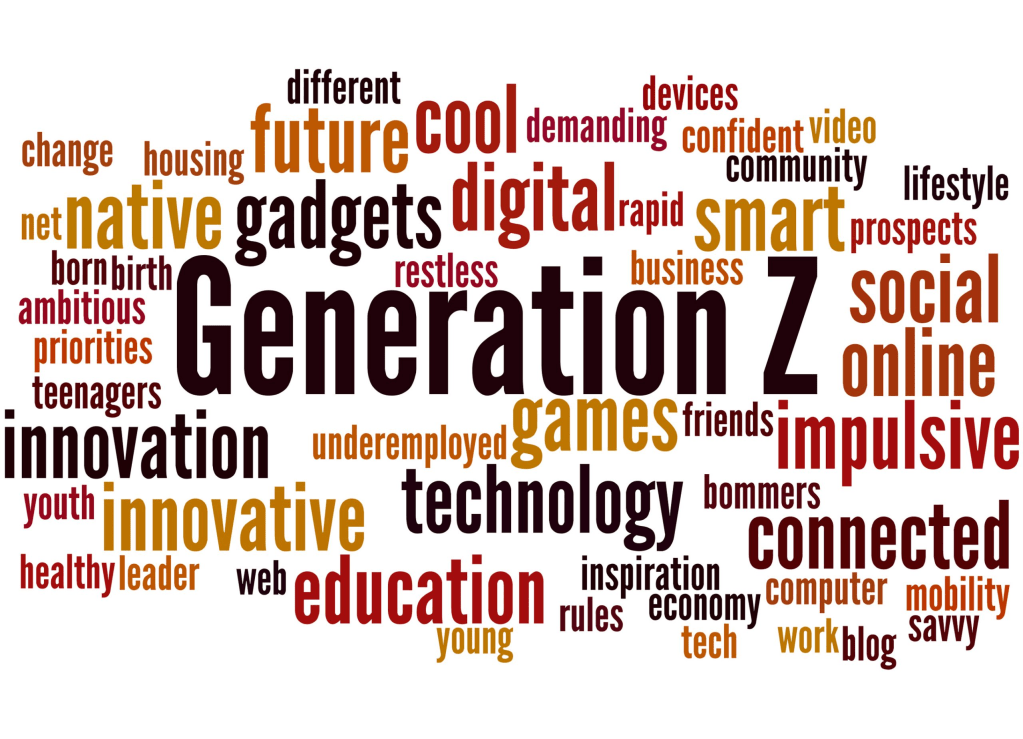
Really well done! The wordle was also a nice touch
LikeLiked by 1 person
This article is great, and brings awareness to young people’s struggles. It also can be used as a tool to discuss issues and how to overcome them.
LikeLiked by 1 person